
Jean Nouvel 與巴黎最前衛的日照實驗
法國建築師 Jean Nouvel 在巴黎所設計的 阿拉伯世界文化中心(Institut du Monde Arabe),一直是建築與燈光設計課程中常會被提及的經典案例。
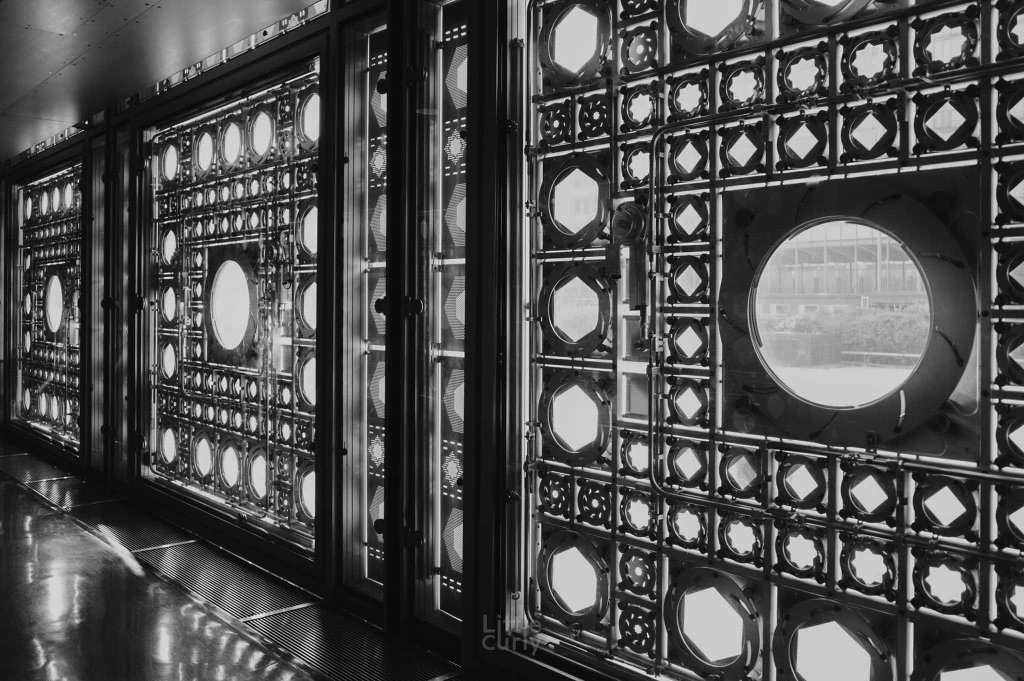
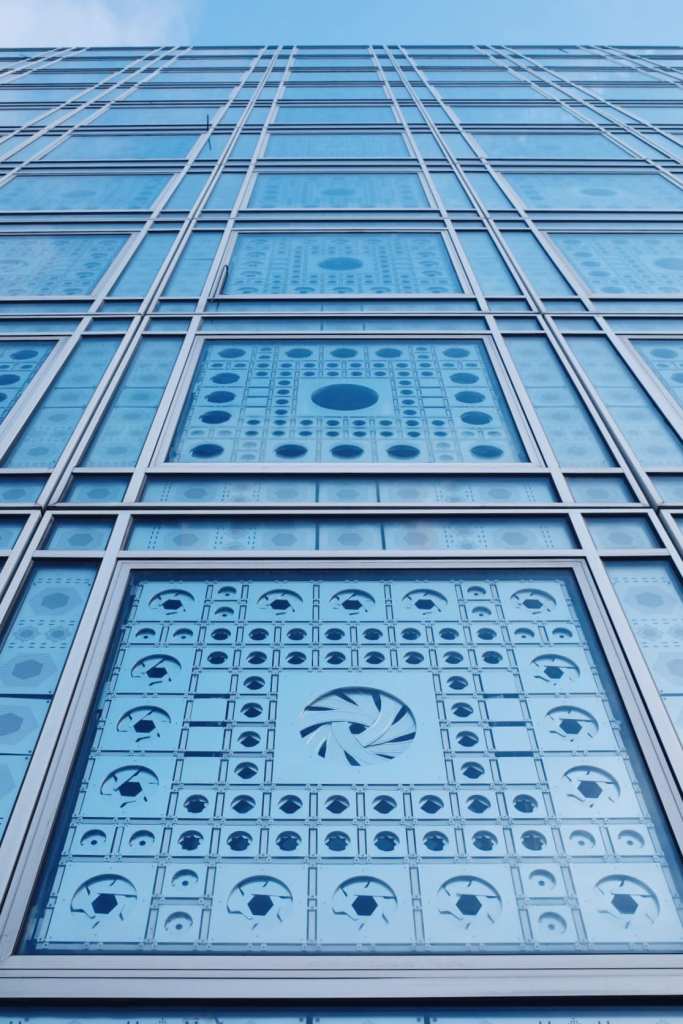
向南的立面乍看是一整片細緻而華麗的金屬窗花,但只要走近一點,你會發現——它其實是一套極其複雜、曾經高度前衛的遮陽系統。
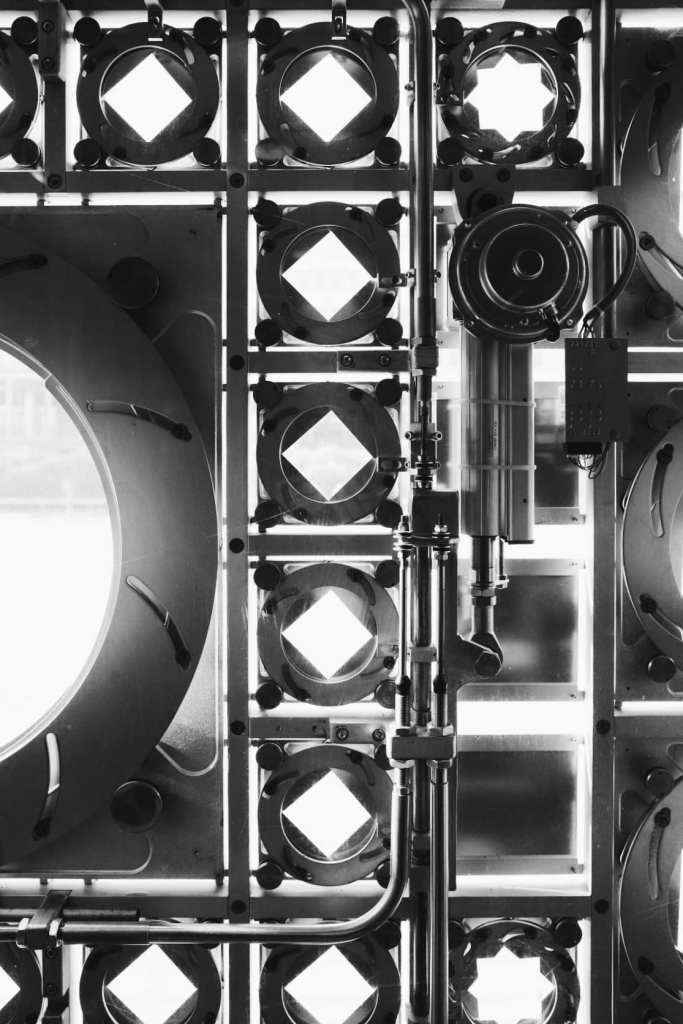
這面立面由約 240 個以光感應為依據的遮陽單元所組成,每個單元皆由機械結構驅動,原始設計構想是隨著日照強弱自動開闔,如同光圈一般,精準控制陽光進入建築的比例。
在這裡,立面不再只是外殼,而是一個試圖回應氣候、調節光線的「機械皮膚」。

從伊斯蘭窗格到高科技立面
這套可動遮陽立面的靈感,來自伊斯蘭建築中常見的傳統窗格 Mashrabiya,是一種同時兼顧遮陽、通風、隱私與裝飾的建築元素。
Jean Nouvel 並沒有直接複製它的形式,而是將其轉譯為一種以氣候為導向的現代建築策略, 透過感測、機械與精密工藝,重新思考「光」在空間中的角色。
即使以今天的角度回看,這樣的構想依然相當前衛。
密特朗大建設下的關鍵作品
阿拉伯世界文化中心興建於 1981–1987 年,屬於法國前總統 法蘭索瓦·密特朗François Mitterrand 任內的「密特朗大建設(Grands Projets)」之一。
值得一提的是,Jean Nouvel 在拿下這個國家級重要案子時,其實才三十多歲,仍是建築界的年輕世代。在國家體制的支持與培養下,這些大型公共建築計畫也成為他日後躍升為國際建築大師的重要起點。
理想與現實之間:那套「會動的窗」後來怎麼了?
第一次造訪這棟建築時,我其實帶著一個很單純的期待,就是想親眼看到那套傳說中會自動開闔的機械遮陽系統運作。
於是我特地去詢問館員,得到的回答卻非常現實…這套機械遮陽系統因為結構複雜、維護成本極高,加上長期使用的技術挑戰,在實務上難以全面維持原本的自動運作狀態,目前多數遮陽單元處於固定或部分可動的狀態。
有朋友在1993 年造訪時,仍看得到部分窗格在運作,但開闔邏輯已經相當混亂;
而另一位朋友在 2002 年秋天參觀時,大多數窗格已經靜止,只有在非常強烈的陽光下,偶爾才能聽見極輕微的「喀喀」聲,仔細找才能判斷出哪幾顆仍能動作。
即便如此,這樣的建築光影依舊迷人。
即使不完全運作,仍然成立的空間
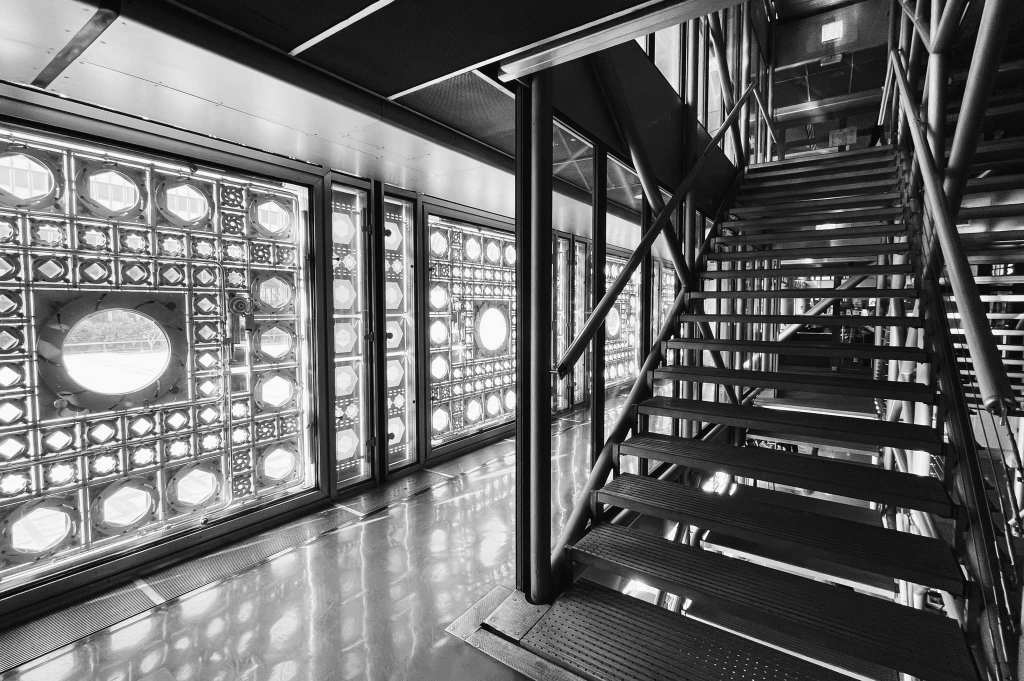
這件作品真正讓我佩服的,並不只是那套高度精密、卻過於超前時代的機械系統,而是 Jean Nouvel 對空間層次與氛圍的掌握能力。
中庭、主立面與次立面的配置關係清楚;不同立面對光線的回應也有所差異。我認為Jean Nouvel 是那種真正「能夠創造空間」的建築師。他在這裡,試圖把光、技術與空間整合成一個整體。而可動遮陽立面本身,無疑是先鋒中的先鋒,可惜太早、太精緻、太仰賴技術支援,才讓理想與現實之間產生了落差。
+++
The Institut du Monde Arabe in Paris, designed by French architect Jean Nouvel, is widely regarded as a landmark case study in architectural and lighting design. At first glance, its south-facing façade appears as an elegant field of metal latticework, but up close it reveals a highly complex and once-radical shading system. Composed of roughly 240 light-responsive mechanical units, the façade was designed to open and close like camera diaphragms, regulating daylight according to solar intensity. In this project, the façade functions not as a passive skin, but as an active, climate-responsive interface.
Inspired by the traditional Islamic mashrabiya, Jean Nouvel reinterpreted this historic element through contemporary technology rather than direct imitation. Sensors, mechanical systems, and precise craftsmanship were used to rethink how light could shape spatial experience. Completed between 1981 and 1987 as part of President François Mitterrand’s Grands Projets, the building marked a pivotal moment in Nouvel’s career, as he was still in his thirties when he received this major national commission.
While the kinetic façade was intended to operate automatically, its technical complexity and high maintenance costs meant that full functionality proved difficult to sustain over time. By the 1990s, only部分 units were still operational, and by the early 2000s most had become static. Even so, the building’s spatial quality remains compelling. The layered relationship between courtyard, primary and secondary façades, and the subtle modulation of light continue to demonstrate Nouvel’s strength as an architect capable of creating atmosphere and space. The project remains a pioneering experiment—ambitious, visionary, and perhaps ahead of the technological realities of its time.

 米蘭小捲
米蘭小捲 